
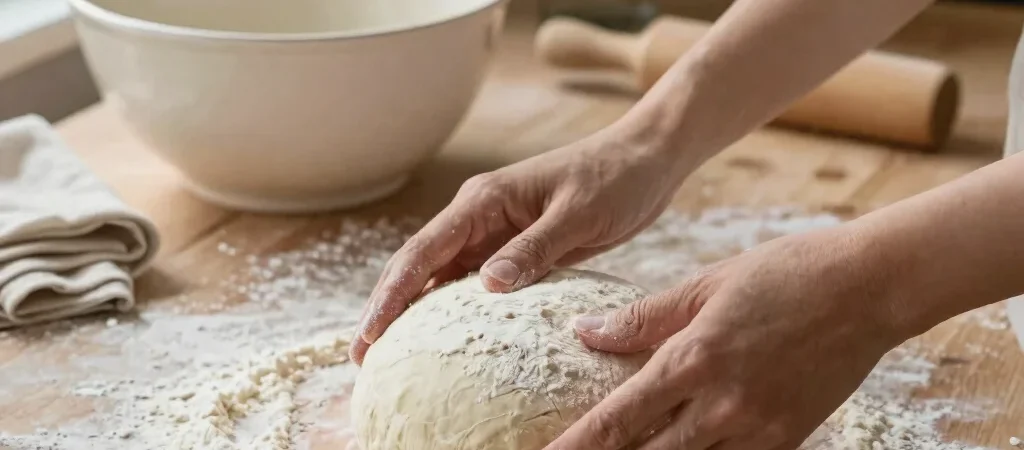
There is a particular comfort in pressing a fingertip into risen dough and seeing the small indentation ease back. The loaf is not ready because the clock says so; it is ready because the dough has changed. Baking asks for attention, but it also asks me to wait.
Follow the dough, not just time
Room temperature, flour, and the strength of the yeast all affect how quickly dough rises, so a recipe’s timing is best treated as a guide. Look for dough that has grown noticeably and feels airy, rather than relying on an exact minute. That small shift—from watching the clock to observing the bowl—makes the process more forgiving.
Keep the process simple
A bowl, a clean towel, and a warm spot away from a draft are enough to get a basic loaf underway. Knead until the dough feels smoother and more elastic, then cover it while it rests; there is no need to turn a home bake into a performance. Flour on the counter is part of the story, not evidence that the kitchen has failed.
Let the waiting be useful
While the dough rises, there is time to wash a few dishes, open a window, or simply sit with a cup of tea. The waiting is not wasted, and the loaf does not need to come out flawless to be worth sharing. Start with one simple dough, notice how it behaves in your kitchen, and let the next bake teach you something.